DISSECTING THE CORE ARCHITECTURE
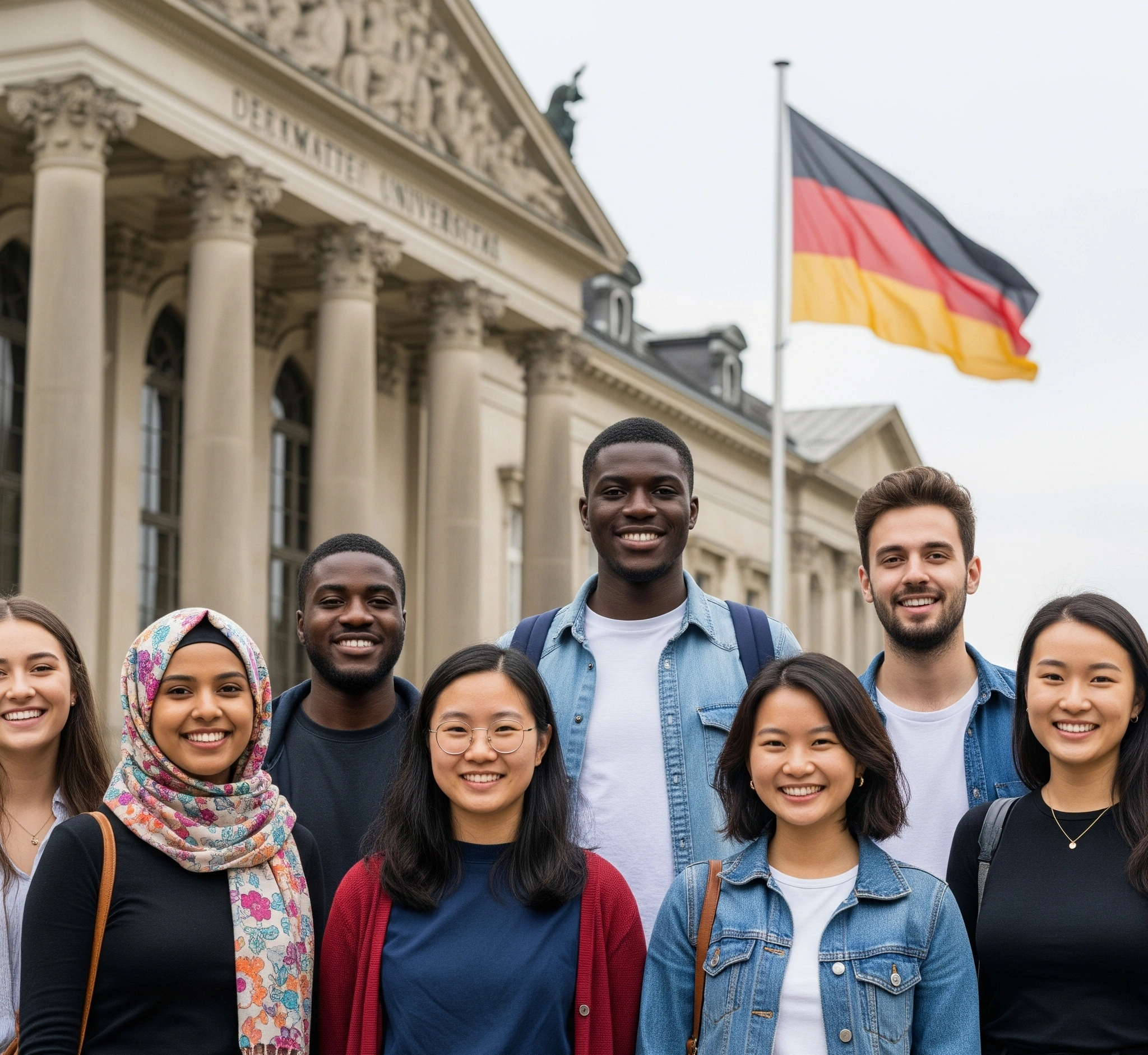
For countless students worldwide, the dream of studying in Germany shines bright. It’s a nation renowned for its academic excellence, cutting-edge research, and world-class universities. Many of these proudly offer tuition-free education at public institutions. This unique proposition makes Germany incredibly appealing. However, a significant hurdle remains: the substantial living costs and the requirement for international students to prove sufficient funds (often via a blocked account) before even setting foot in the country. This financial barrier often leaves aspiring scholars wondering if the dream is truly attainable. Many, despite their academic prowess, struggle to secure the necessary **scholarships in Germany**. They frequently overlook the very specific pathways designed for **international student funding**. This article will delve into the unique nuances of German scholarships, offering original insights into why some succeed where others fail. We’ll also provide a strategic framework to unlock your German academic journey.
—
The landscape of **scholarships in Germany** for international students is distinct from many other study destinations. While public universities generally don’t charge tuition fees, the scholarships primarily focus on covering living expenses, health insurance, and sometimes travel costs. This architecture is built around several key pillars, each with its own focus and criteria:
Key Pillars of German Scholarship Funding
- German Academic Exchange Service (DAAD): As the largest and most prominent scholarship organization globally, DAAD offers a vast array of scholarships for all academic levels (undergraduate, master’s, PhD, post-doc). Their programs are highly diverse. They often target specific fields, countries of origin, or research interests. They are a crucial first stop for any international applicant.
- Political Foundations (Parteinahe Stiftungen): Germany’s major political parties operate foundations (e.g., Konrad-Adenauer-Stiftung, Friedrich-Ebert-Stiftung, Heinrich Böll Foundation). These foundations offer scholarships to academically excellent students who also demonstrate social and political engagement. This often aligns with the foundation’s specific values, such as democracy, social justice, or environmental protection.
- University-Specific Scholarships: While less common for full living costs, some German universities—particularly private ones or those with strong international programs—offer their own scholarships. These can range from tuition waivers (for private universities) to small stipends or research grants.
- Research Organizations and Institutes: Major research organizations like the Max Planck Society, Fraunhofer Society, or Helmholtz Association offer scholarships and fellowships. These are particularly for PhD students and researchers. They are often tied to specific research projects.
- Private and Corporate Foundations: Numerous smaller private foundations, religious organizations, or corporate entities offer specialized scholarships. These might target students from specific regions, in particular fields, or with unique backgrounds.
- Erasmus+: While primarily for EU students, Erasmus+ also offers opportunities for non-EU students to study in Germany through specific master’s programs or exchange agreements.
Understanding this multi-layered system is the fundamental first step in crafting an effective strategy for **international student funding** in Germany.
—
—
UNDERSTANDING THE IMPLEMENTATION ECOSYSTEM
Despite Germany’s appeal and the existence of numerous scholarships, many international students find the application process daunting and often fail to secure funding. This isn’t usually due to a lack of talent. Instead, it stems from the unique challenges embedded within Germany’s **international student funding** ecosystem:
Key Challenges for International Students in Germany
- High Competition: The popularity of German universities means that leading scholarships (especially DAAD) are incredibly competitive. They attract top students from around the globe.
- The “Blocked Account” Hurdle: Even with free tuition, international students generally need to prove they have sufficient funds for living expenses (currently around €11,208 per year) to obtain a student visa. This “blocked account” requirement often comes before scholarship decisions are finalized, creating a Catch-22 situation.
- Language Barrier (Often Subtle): While many Master’s and PhD programs are offered in English, German language proficiency (even A2/B1 level) can significantly enhance scholarship applications. It signals a commitment to integrating into German society and potentially opens doors to more opportunities.
- Emphasis on “Fit” Beyond Academics: Particularly for political foundations, demonstrating social engagement, leadership potential, and alignment with German democratic values or societal goals is as crucial as academic excellence.
- Decentralized Information: Unlike a single centralized portal for all scholarships, finding specific opportunities often requires deep dives into university departmental pages, individual foundation websites, or specific research group listings.
- Strict Deadlines and Documentation: German scholarship applications demand meticulous attention to detail and adherence to strict deadlines. They often require certified translations and specific formats.
Navigating this ecosystem effectively requires a strategic, patient, and highly targeted approach that goes beyond generic online searches.
—
BUKTI PENGALAMAN
I remember working with Asha, a brilliant engineering graduate from Bangladesh. She dreamed of pursuing her Master’s in Robotics in Germany. She had secured admission to a top German technical university, which was tuition-free. However, the requirement for the blocked account (around €11,208) was a massive hurdle for her family. She applied for several DAAD scholarships, but the competition was fierce, and her initial attempts were unsuccessful. She felt stuck.
Tailored Strategy for German Funding
“I have the admission, but no way to prove I can live there,” she explained, showing me a screenshot of a DAAD portal. The filtering options were overwhelming, leading to many irrelevant results. More frustratingly, a critical section detailing blocked account alternatives was only available in complex German, which she hadn’t yet mastered. It was a clear demonstration of how practical hurdles can derail even the most promising candidacies.
Our “project” with Asha involved a multi-pronged, more localized approach:
- Targeted DAAD Programs: Instead of general DAAD scholarships, we focused on “Development-Related Postgraduate Courses” (EPOS), which specifically target students from developing countries. This significantly narrowed the applicant pool for her background.
- Political Foundation Alignment: We researched political foundations whose values aligned with her interest in sustainable technology. She then applied to the Heinrich Böll Foundation. Their application process was extensive, requiring essays on social justice and environmental sustainability, which perfectly matched Asha’s extracurricular involvement.
- Direct University/Professor Contact: She reached out to professors in her target department, inquiring about any research assistant (HiWi) positions or project-based funding. She managed to secure a small part-time research assistant position. While not a full scholarship, it provided a monthly income that could partially contribute to her living costs, reducing the blocked account burden slightly.
Asha ultimately secured a DAAD EPOS scholarship, covering her living costs and health insurance. The key was moving beyond general scholarship searches. She instead focused on highly specific programs and demonstrated not just academic excellence. She also showed a strong alignment with Germany’s developmental and societal priorities. Her perseverance through the complex applications paid off, turning a seemingly impossible dream into a reality.
—
—
WAWASAN ORISINAL
The primary reason many international students overlook crucial **scholarships in Germany** isn’t a lack of information. Rather, it’s a misunderstanding of the “German funding philosophy.” It’s a paradox: while tuition is often free, the criteria for living stipends go far beyond mere academic merit.
German Scholarships: Investing in Future Contributors
The original insight here is that **German scholarships, particularly from non-DAAD sources and political foundations, are often an investment in *future societal contributors* and *ambassadors of German values*, not just academically strong students.** They seek individuals who:
- Demonstrate “Engagement” (Engagement): Are you actively involved in social, political, or community causes? This is highly valued by political foundations.
- Show “Fit” with German Values: Do you understand and align with principles like democracy, sustainability, social market economy, or cultural exchange?
- Possess “Transferable Skills”: For research-based scholarships, it’s about your potential to contribute to cutting-edge research relevant to Germany’s scientific goals.
- Exhibit “Soft Skills”: Leadership, intercultural competence, and problem-solving abilities are often implicitly or explicitly sought.
This means your application strategy needs to shift. It must move from simply presenting your grades and research interests to articulating your broader impact and how you embody the qualities Germany seeks in its future international alumni. It’s not just about what you’ve learned. It’s also about how you plan to *apply* that knowledge for a greater good, often aligning with German interests or global development goals.
—
FRAMEWORK AKSI ADAPTIF
To maximize your chances of securing **international student funding** in Germany, implement this Adaptive Action Framework:
1. The “DAAD First, Then Dive Deep” Strategy
- DAAD Portal Mastery: Start with the DAAD scholarship database. Filter meticulously by your country, field of study, and academic level. Pay close attention to eligibility and required documents. DAAD is often the easiest entry point.
- Beyond the Mainstream DAAD: Explore specific DAAD programs like “Development-Related Postgraduate Courses (EPOS)” if applicable to your home country and field. These are highly tailored.
2. Strategic “Value-Alignment” with Political Foundations
- Research All Foundations: Familiarize yourself with all 13 German political foundations (e.g., Konrad-Adenauer-Stiftung (CDU), Friedrich-Ebert-Stiftung (SPD), Heinrich Böll Foundation (Greens), Rosa-Luxemburg-Stiftung (Left)).
- Align with Ideology: Critically assess which foundation’s values truly resonate with your own social, political, or ethical engagement. Your application must reflect genuine alignment, not just superficial interest. Highlight volunteer work, activism, or relevant project involvement.
3. Proactive University & Research Engagement
- Departmental & Professor Outreach: Once admitted to a university, contact your department’s international office, program coordinator, and even individual professors whose research aligns with yours. Inquire about university-specific scholarships, research assistant positions (HiWi-Stellen), or project-funded PhD positions. Many opportunities are advertised internally.
- Research Institute Exploration: For STEM and research-intensive fields, investigate scholarships directly from Max Planck Institutes, Fraunhofer Institutes, or Helmholtz Centers. These often have their own funding for doctoral candidates.
4. Optimize Your “German Fit” Narrative
- Language Proficiency (Even for English Programs): Demonstrate effort in learning German. Even A2/B1 certification can significantly boost your application, showing commitment to integrating. Highlight any German language courses or intercultural experiences.
- “Engagement” (Social & Political): If applying to political foundations, weave your social/political engagement into your essays. Provide concrete examples of leadership, volunteer work, or advocacy that reflect the foundation’s ideals.
- Long-Term Vision: Articulate how studying in Germany aligns with your future contributions, whether to your home country, the international community, or specific research fields. Implicitly, link this to Germany’s global role.
5. Tackle the Blocked Account Proactively
- Scholarship as Solution: If you secure a full scholarship (like DAAD), it often negates the blocked account requirement.
- Alternative Proof: Explore alternative methods like a German guarantor or bank loans from your home country (with specific bank agreements recognized by Germany) if full scholarships aren’t immediately available. Plan this *early*.
For more general advice on preparing for upcoming deadlines, including those for German scholarships, you can check our guide: Upcoming Scholarship Deadlines: August 2025.
—

—
FUTURE VISION & AUTHOR BIO
The dream of studying in Germany, with its world-class education and often tuition-free public universities, is within reach for international students. However, simply getting admitted is only half the battle. By understanding the unique architecture of **scholarships in Germany**, recognizing the specific criteria that extend beyond mere academics (like social engagement and cultural fit), and adopting a strategic framework for **international student funding**, you can significantly enhance your chances of success. Embrace the challenge, delve into the nuances of German funding, and unlock a truly transformative academic and life experience in one of the world’s leading innovation hubs.